Lebbeus Woods – SCIENCE TO ART
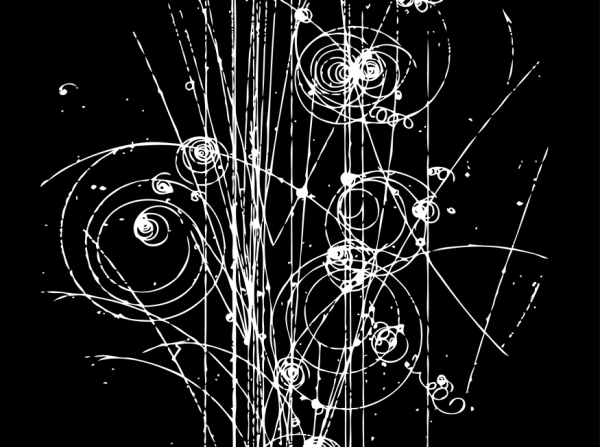
The interplay between science and art is fascinating but ill-defined. Does science produce a kind of art almost incidentally, for example the images of sub-atomic particles colliding in a linear accelerator? They certainly look like art—abstract and evocative. But doesn’t a work of art have to be created with an intention to be so? If not, then any interesting image would be art and that would disturb the existing social system of values that insists that art be created by artists and science by scientists.
In the Studio – discussing Large Hadron Collider
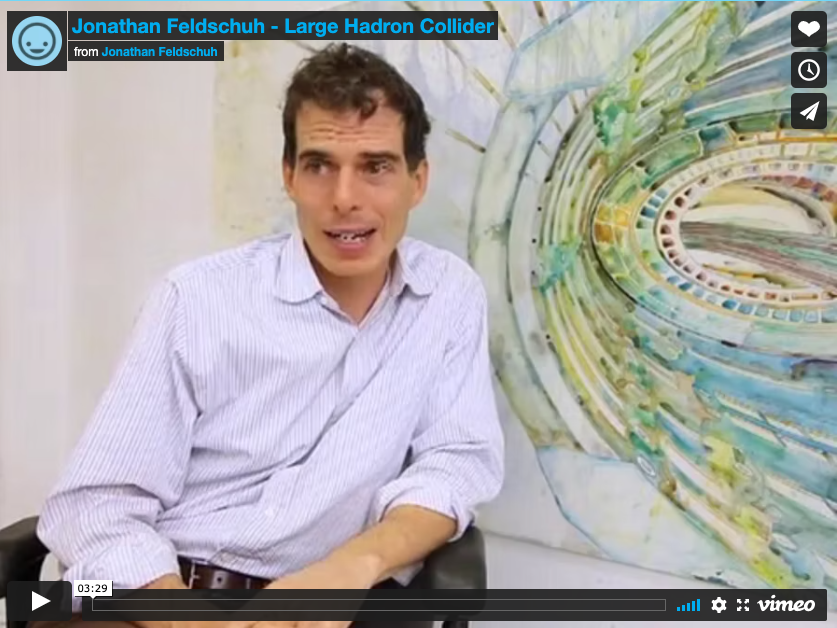
Jonathan Feldschuh talks about the Large Hadron Collider series – in the studio, November 2011.
George Quasha – art is (Speaking Portraits Vol. 1) – 2009
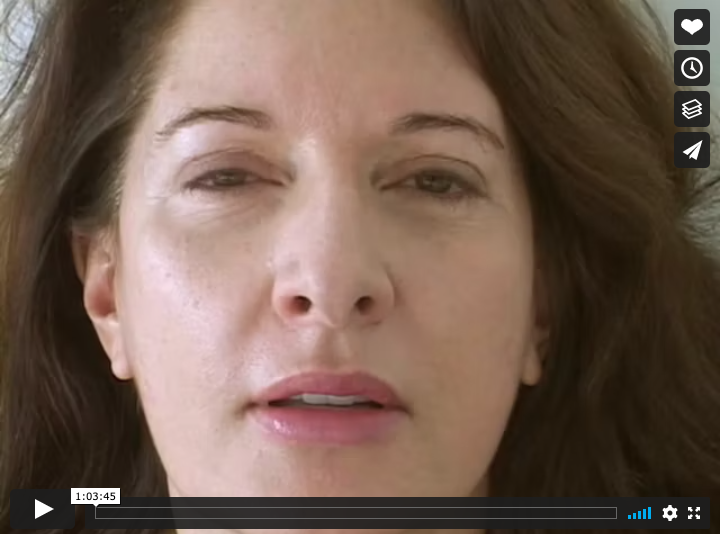
art is (Speaking Portraits)–[Vol. I — v. 1.4]–
In his ongoing video art work of “speaking portraits,” artist/poet George Quasha puts an impossible, but unavoidable, question before artists of all kinds and in many places: what is art? In response artists let us in on their private space of art definition. This intimate view of speaking faces, each filling the screen, shows how different it is for artists to say what art is than for others (critics, historians, philosophers, viewers). For a particular artist, art may not only be an object, a thing historically defined, but something close to the core of one’s life, perhaps even a singular event. Here we gain unique access to its nature in the person speaking.
Lily Wei – Catalog Essay for “Simulations”
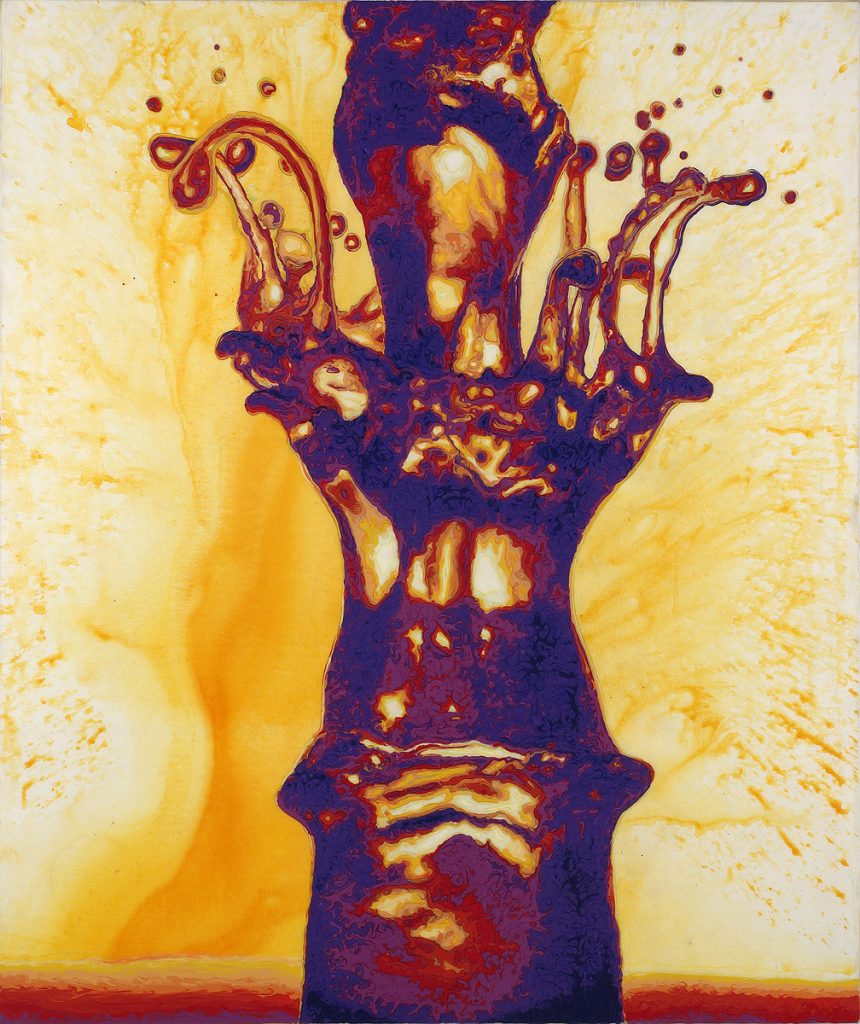
Art & Science, Re-mixed
A full spectrum of vivid, blowtorched colors blasts out from several of Jonathan Feldschuh’s new paintings. Others are more muted in hue but no less multicolored or rich. Still others have the respite of a deep blue-black ground. All, however, radiate an intergalactic glow as if seen through an immense mediating lens probing the furthest reaches of immeasurable space. They might be details of the elegant universe in either macro- or micro-mode or they might be non-representational paintings. Feldschuh, like many artists today, likes it at least both ways, collapsing the syntax of representation into that of abstraction. Nonetheless, for this series, his (con)figurations are based on actual images, taken from simulations created by supercomputers or in wind tunnels and other test sites. Feldschuh says he is interested in less familiar scientific imagery and in phenomena that can’t be observed directly.
Shenandoah Retreat House

Commissioned artwork for an eco-aware private residence designed by Carter Burton Architects
Gregory Williams: catalog essay for “Macrocosm”
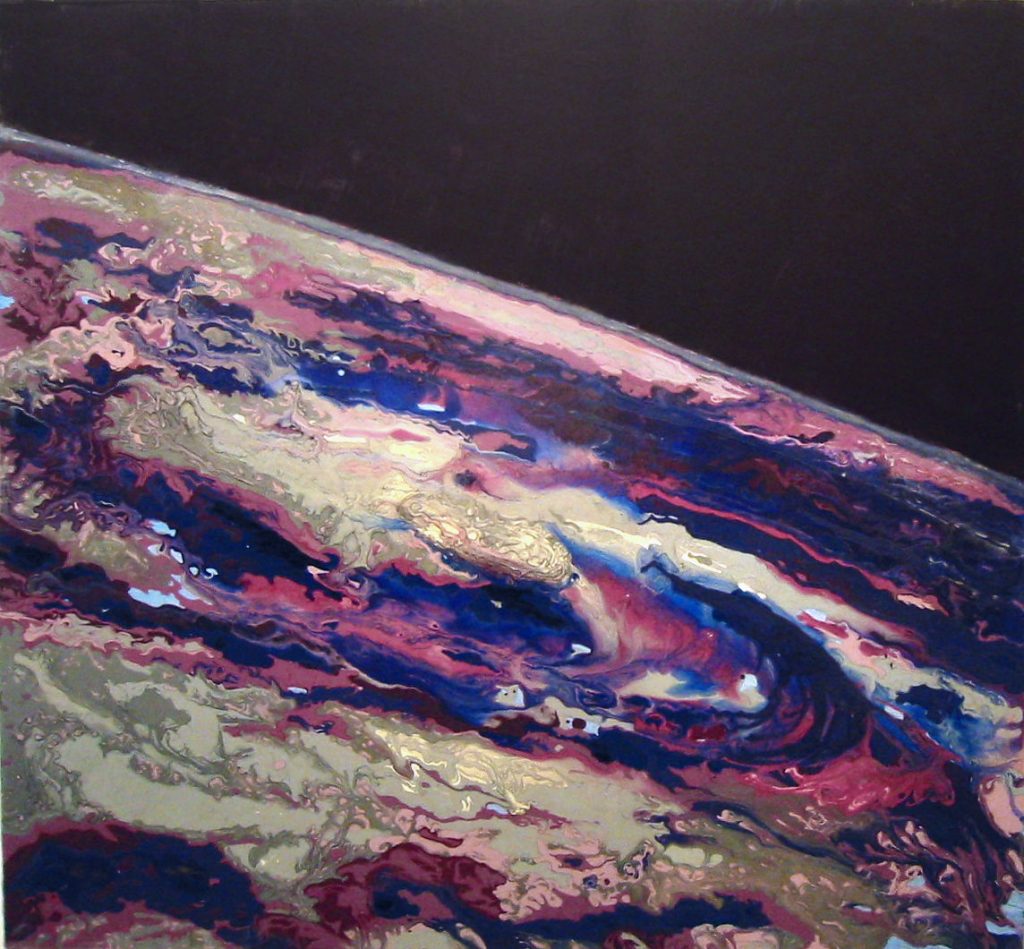
Recent advances in computer-imaging technology have allowed scientists to picture the inconceivable by capturing background radiation emanating from the Big Bang. The result is a beautiful digital rendering that still gives the novice very little sense of what the universe actually looks like. Jonathan Feldschuh has made the wise decision to turn these data accumulations into something more tangible, a painting such as Early Universe North Galactic Hemisphere. Not that anyone still believes in painting’s truth-telling capacity, but acrylic on canvas offers a degree of materiality that is welcome when dealing with mind-bending abstractions.
THINKING IN THE ABSTRACT – David Ryan on “Vivid” in Contemporary

DAVID RYAN CONSIDERS THE DIFFERENCES BETWEEN NEW YORK ABSTRACTION AND ITS BRITISH COUNTERPART
Vivid – Richard Salmon Gallery, London
group exhibition: Torie Begg, Diana Cooper, Clem Crosby, Jonathan Feldschuh, Dennis Hollingsworth, Joan Key, Dona Nelson, Thomas Nozkowski, Jonathan Parsons, Martyn Simpson, Michael Stubbs, Daniel Sturgis
Press release
Feature from Contemporary
Review from the Times of London
Further venues: Mead Gallery, Warwick Arts Center, Coventry. April 27 – June 28, 2002
Northern Gallery for Contemporary Art, Sunderland, July 12 – August 23, 2002
Review of “Vivid” – Times of London

MORE American abstractionists, along with their British equivalents, in Vivid at the Richard Salmon Gallery. It is correct, by and large, to call their painting abstract, but they are by no means dogmatic on the subject: if some concrete reference or even (perish the thought) an apparently explicit title will help, then they are game.
Artforum: Frances Richard on Jonathan Feldschuh

Jonathan Feldschuh
CYNTHIA BROAN GALLERY
In “Little Corner of the World,” his first solo show in New York, Jonathan Feldschuh exhibited twelve canvases, varying in size but consistent in their mixture of cartoonish sci-fi and romantic verve. A product of the Harvard physics department, Feldschuh has a nice feel for the fine line between microscopic and cosmic conceptions of space and good instincts for the salutary effect of elegance on silliness (and vice versa).